Category: Fashion

  • Making Change

    #TheLook

    “The modern suit can trace its origins back to Beau Brummell. The English socialite was a prominent figure in Regency England and was responsible for starting many sartorial trends. Through this period, Western fashion was heavily influenced by the flamboyant styles of the French court.” (https://suitshop.com/blogs/news/a-history-of-mens-suits/)

    Once an upon a time, and it wasn’t that long ago, women working in daycare’s for men the Office had to wear knee length skirts, no pant suits please. I started work at daycare for men an Office at the tail end of those years, and duly showed up feeling sharp, nervous AF, and ‘professional’, in a newly procured skirt ensemble. 

    Did it help me get ahead? absolutely not…. 

    Dress for the job you want 

    But looking like a ‘professional’ certainly helped me feel like one, to fit in with everyone else, to take away Level 1 Judgement (superficial; looks, clothing, etc.) so that, hopefully what you do rather than how you look takes centre stage.

    I remember seeing a girl on the weekend at the local shopping centre wearing a suit jacket, in maybe 1996 and thinking, ‘She doesn’t have to wear those during the week does she’. The delineation between corporate / office life and weekend life, was super clear. Maybe if you weren’t career focused you hoped to spend as little as possible on ‘work wear’ like you resented it, like buying school uniforms. I had read and agreed with the line in Anna Johnson’s “Three Black Skirts”, – you’re paid to look like you’ve got your shit together during the week, save the thrifting for weekend looks that are easily elevated in the shadows of cocktail bars etc. Also I felt like spending 40+ hours a week in these clothes made ‘investment dressing’ make sense. 

    Well we all know what happened at the turn of the century. Skivvy’s and jeans became the look du jour in the office. NO need to revisit it. 

    Regardless of this though, life and work started to bleed more into each other, your job is your identity and you give up your life for it. Slowly but surely, more weekend wear made it into the office, while ties gradually stayed slung over the back of the office chair, rolled up in the desk drawer only for important client meetings. 

    The Americanisation of the world marched on 

    It’s common in English speaking countries to wear athleisure or flat out gym clothes out and about while running errands, going for coffee, etc. All day. No need to even go to the gym. “I can wear what Iwant” whereas in Europe and France in particular, (it’s not just a Paris thing) you just don’t. Some say it’s snobbiness or something; it’s not, it’s “We’re living in a society, other people have to look at you”. Looking like you made an effort to be seen in public is showing respect for the other. Social cohesion as performance art if you will. 

    And Now, after years and years of going to a corporate office many are working from home, working from cafe’s, not working, languishing, working for themselves, raising families, pets and so on. 

    What does a wardrobe look like for a new life, when you’re no longer the Mary Poppins of the working world?

    Finding new Lands

    Moving on doesn’t have to be physical, it doesn’t always mean moving house, moving countries. Even if it does, those kinds of moves are often symbolic anyway, because no matter where you go, you take yourself with you. But at the start of the Lunar new year, which this year is the Snake, it is also symbolic that the snake is an animal that keeps its form but sheds its skin.

    The Reset

    Travelling for six weeks with 7 items of clothing in a carry on, plus a coat will do that for you. A black midi pleated knit skirt, 2 t-shirts (grey, black), A blue striped long sleeve t-shirt, A wine coloured cashmere knit, a beige sweatshirt and black pants. plus tights. Oh and a sequinned Chanel jacket which was an absolute waste of space and therefore doesn’t count. 

    After week two you really don’t care to visit another Zara or fashion website. You realise you want to be comfortable, but also taken seriously. Not necessarily as an authority in fashion however, but it’s too early in life to have given up and it’s too late in life to care that much about what you wear, or anything other than your own opinion for that matter. Because after a life devoted to the acquisition of personal style and all the assets that represent that, you realise that one day you will look back and be happy with what you did more than how you looked, and while being regarded as well dressed is certainly a goal worth achieving, (and I hope I have and will continue to achieve it) .. in the words of Bjork.. “there’s more to life than this”
  • Prince William, the full stop or a capital letter?

    Aristocracy. Monarchy. Equality. Which word is the odd man out? Or can they co exist under a new model of leadership?

    Hundreds of years of evolution and progress, have gone by, improving living standards enormously, and while equality for all is something we apparently all want, it couldn’t be more evident today that we haven’t really managed to achieve it have we? All we have done is move structural inequality offshore and out of sight. We all participate in this. 

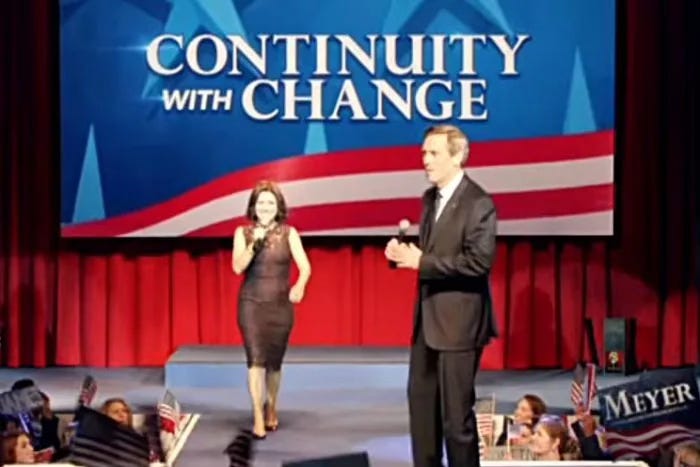
    The current mess of British politics: The news and polls strongly suggest that the 13 year reign of the Tory party is definitely coming to an end at the next election. The Labour Party, currently led by Keir Starmer, and no doubt remembering the mistakes of the Corbyn leadership, have not presented a bold vision that will guarantee victory, but more likely they will win under a ‘not them’ result. Neither side seems able to address or make substantial change to the elephant in the room, the deeply ingrained structural hierarchy and class system that exists. The best either of them seem to be able to come up with is “Change, with Continuity” (credit: Selena Meyer). With the percentage of people living below the poverty line 10% higher than its English speaking peers (Canada, Australia, USA), the case for continuity is flimsy. 

    Since the the year 1215 steps have gradually been taken to minimise the power of the king and bring about democracy. A thousand years later, have we come full circle? Is it time to bring them back? A Monarchy re-imagined could be a model to consider. 

    While statistically the under 40s claim not see the monarchy as relevant today, given the state of politics in the UK, do they have an alternative? The proliferation of smaller alternative parties suggests that change is both desperately needed and wanted.

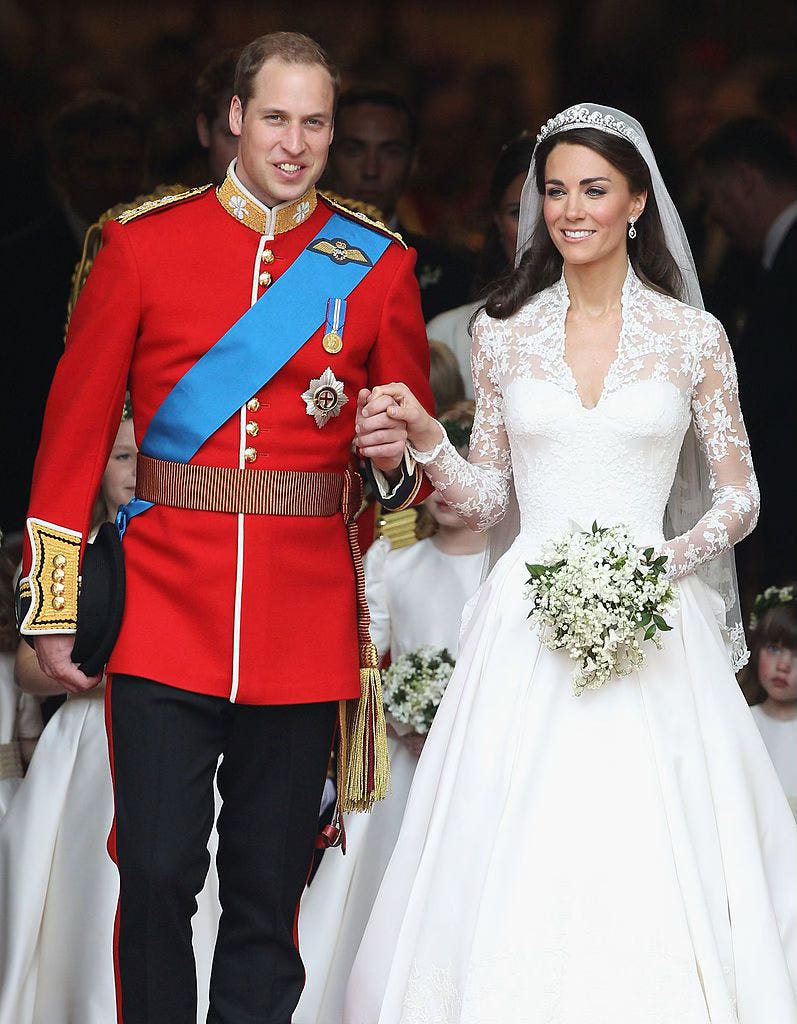
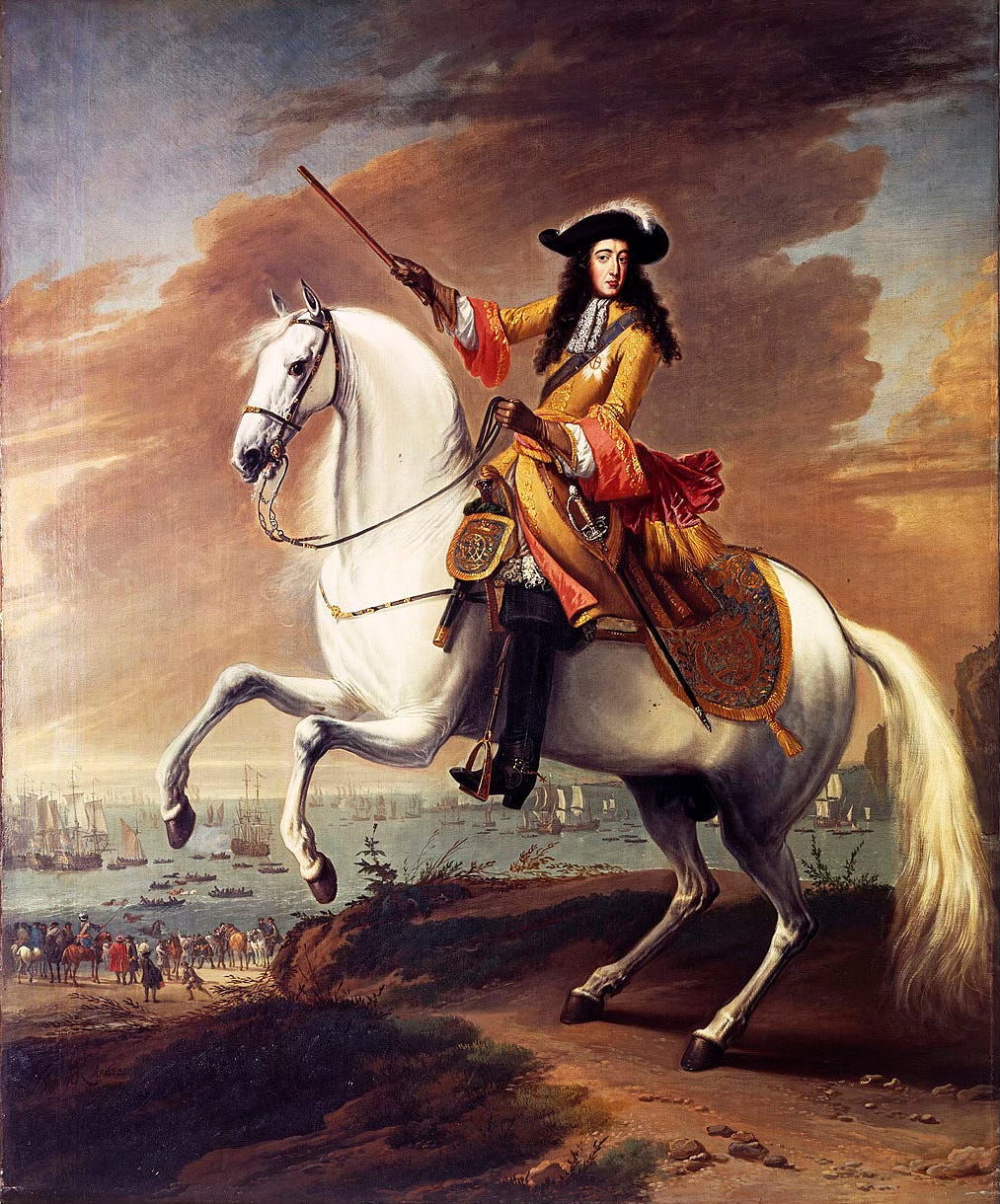
    All hail William: Now Prince William in charge of the Duchy of Cornwall, reportedly worth 1.2 billion pounds, is technically financially independent. A leader who is independently wealthy and tasked only with working for the people, in the best interests of everyone, regardless of who you vote for. Is it time to dismiss the right and left, the eternal tug and war between money and people and just like in the times of the aristocracy, when opposing families got married to ensure peace, have one leader who cares about both?

    William, with the help of Catherine has put aside his desire to be ‘normal’ (or at least stopped whining about it) and gotten on with the job of being Royal. 

    A plan to focus efforts on real improvements: We are all familiar with the Royal photo ops where members of the family visit their patronages and perform for the camera bringing ‘visibility’ to each one and not much else. Rather, Catherine has chosen one key project as her cornerstone or legacy, the magnificent Early Years project, focusing on improving the first five years of a child’s life. This is a demonstration of long term thinking. Whether it influences policy remains to be seen. 

    William has committed to building 24 homes on Crown land to relieve homelessness in Cornwall. Obviously this was met with howls of derision at the size of the project compared to the size of the problem. Apparently the idea was drawn from Finland where they quite wisely and pragmatically solved the homelessness problem by giving people homes to live in. Could this be a test project for the UK? A chance for William, with Catherine to turn the monarchy into part of the solution instead of being ideologically part of the problem?

    The Republic organisation in the UK had this to say about the project :  “Rather than be thankful for a few homes built on Duchy land, which William will profit from, we all need to be demanding the return of the Duchy to full public ownership and an end to the monarchy.”

    The question is – Can the UK government be trusted with it? that would keep the Duchy in safe and profitable hands, or will it go the way of the nations gold reserves and be sold off for a short term profit, putting that year’s budget in the black, and no doubt an election year at that.

    The class system and other forms of judgement: in the UK and everywhere creates so much waste. Wasted talent, waste ideas that were never brought to fruition due to financial circumstances or not being in the right ‘network’. Resources wasted giving people the bare minimum in the short term, the proverbial fish rather than the fishing rod AND access to the river

  • My body just isn’t cut out for running….

    running like an athlete

    One of the cheapest and easiest and most freeing way of getting and staying in shape for your whole life is running. 

    Now, if you take it too far, it can be a vice, and then you become someone who only talks about running, who experiences chafing too often, wears too much lycra too often, and are constantly going to the physio for an injury, caused by too much running, especially if you are physically imbalanced. Running using the hip flexors instead of the glutes for example my dear desk warriors. 

    But on a more positive note. As a thin but un-sporty teenager joining a gym, I was mesmerised by the people running for what seemed like forever on the treadmills, legs light and nimble moving effortless rhythm. 

    I got on, that looks easy I thought, and started walking and gradually increased the speed to something more than a jog and within two minutes it felt like these logs of lead attached to my trunk were the most uncoordinated tools of torture and my chest was heaving and lungs about to explode. First and last time I tried that for a long time. I’m just not made for running I said to myself. My body is not suited to this.

    A lot of time went by, different forms of exercise came and went… step aerobics, half assed attempts at weights programs, stuff with bands, long periods of nothing, . … yoga and pilates became a thing.. a gym membership direct debit would often be hanging around, and my whale the treadmill would be there .. taunting me. 

    And then early mid life hit. A stressfully boring job and a realisation I would one day be old, made me realise I wanted to be the kind of old that was active and healthy, not hobbling around hunched over and at the mercy of possibly ambivalent carers. So on went the running shoes and the training began. I wanted to be one of those people who effortlessly powered their legs one after the other, to be strong and sprightly. As I got going, one night, at cocktail do at a friend of a friends house I saw she had a mannequin in the corner of her effortlessly cool town house, draped with multiple medals from marathons she had run (she was a about 10 years older than me at the time, not that you could tell on a side by side). I. was. mesmerised. I want that too I thought. 

    I did much research as to how to train for marathons, and also found that there were always half marathon options available. I wanted to still like running I thought, so the halves were the way forward and you still got a medal. 

    Here’s what I learned, ten years later, having now run six half marathons, and done enough running that even after three or fours years off the treadmill you can still hop on and shift into running mode as if your last run was last week (the next day however is another story):

    • common sense and widespread wisdom says if you want to run and run faster you gradually increase your pace of training over sessions and weeks, incrementally until you become comfortable with the faster pace. This does work but I found it to be slow going and harder than;
    • in the beginning, just power walk, then break into a jog at a comfortable pace for 1-2 minutes then walk again. only do this though for about 4-6 sessions then it’s time to step it up.
    • running a bit faster than you’re comfortable with, for at least a minute, but two to three is better and then train down, gradually decreasing your pace over the course of minutes as you catch your breath. 
    • control your breath as much as possible. this doubles as a moving meditation session. always breath in through the nose as much as possible, but when you are recovering while still moving, use your mouth to breath out under your control, not like a Labrador on a hot day. 
    • intermittently run faster than you ever thought you could for 1 minute. Always remind yourself you can put up with any amount of discomfort for 1 minute. Never recover from sprints by walking, always jog, even if it’s a slow jog it must be a jug. This will train your heart to recover quickly.
    • always have a playlist that matches the beat of the music to the rhythm of your feet
    • when you are really doing it, you’re controlling the breath, the arms are pumping forward like a real runner, the legs are moving forward and the foot is landing underneath you, in time to your music and your hips are straight, not sashaying anywhere, you are getting fit while meditating.
    • Lastly, think of your heart like a canary in your hand, you want to sooth it if it gets too wriggly, but not hold it so tight you make it worse and stress it out. Just gently keep an eye on how hard it’s beating and use your breath like soothing words to calm it down. 

    And that’s it, a bit of envy combined with a desire for a better future gave someone who had never committed long term to anything the drive and tenacity to learn how to run, which became a skill and a practice that lives in my lifeskill toolbox. Never ever believe you’re not cut out for it, if I can do it anyone can.

  • Letter to the Editor #3

    Letter to the Editor #3

    https://www.afr.com/politics/albanese-must-say-no-to-bailing-out-andrews-20230403-p5cxqi

    https://www.afr.com/policy/economy/chalmers-jets-off-with-no-real-growth-strategy-20230412-p5czv2

    April 14, 2023

    There was some concerning use of words and punctuation in the editorials “Albanese must say no to bailing out Andrews” (April 12) and “Chalmers jets off with no real growth strategy” (April 13).

    Daniel Andrews has invested a significant amount in infrastructure for Melbourne and Victoria; the use of the word “profligate”, which means recklessly extravagant or wasteful, seems shortsighted. Was the Sydney Opera House profligate at the time?

    This is infrastructure that will benefit future generations. As for the comment about Victoria’s credit rating, why are the rating agencies still in business after they failed so miserably in the lead-up to the GFC?

    The use of punctuation on the words “care economy” was disrespectful to the work, “care” and sacrifices parents put in (not to mention all the other types of carers). This attitude is then reflected in flagging NDIS for “out of control” spending. As for who will pay for it – didn’t the Productivity Commission model this as paying for itself? If they were wrong about this, what else are they wrong about?

    Is it ever possible to remove ideology from data? At the very least outdated ideology? The ideology that we are all ‘individuals’, the ideology or is it propaganda that shouts down the suggestion that we are not with the very simplistic opposite – ‘socialism’, the ideology that women must be forced, cornered even, into care duties by the deprivation of their own resources. And to then dismiss that work as ‘worthless’, to have it looked down upon, is just so disrespectful, I’d like to say it’s ‘un-Australian’ but unfortunately it seems it is very much not.

  • Letter to the Editor #1

    Letter to the Editor #1

    https://www.afr.com/work-and-careers/leaders/boards-sound-alarm-on-labor-spending-intervention-20230207-p5ciqc

    February 10, 2023

    Boards sound alarm on Labor spending, intervention” (February 10) really has to be the final straw in responses to Jim Chalmers’ essay.

    The reporting and commentary in The Australian Financial Review has been, quite frankly, embarrassing – for this newspaper, for the business “leaders”, and for Australia, as it confirms the suspicion that we are five to 10 years behind the rest of the world.

    The free-market, neoliberal, Milton Friedman-led ideology has been over for ages. Even Friedman’s school acknowledges it’s over. If nothing else, the shellacking received by the Liberals at the last election should have told you it’s over.

    The relentless bleating for “lower taxes” is the only idea business leaders have, the apparent solution to everything. No wonder we’re in trouble.

  • Letter to the Editor #2

    Letter to the Editor #2

    March 6, 2023

    https://www.afr.com/work-and-careers/workplace/rich-women-a-social-revolution-worth-celebrating-20230301-p5colw

    As a professional woman, the above article appeared to strike all the right notes, until it didn’t and then became rather concerning.. 

    You state: 

    “The steady surge in female participation has also been a source of economic growth and greater prosperity for all Australians. That is worth underlining … to guard against zero-sum gender thinking.”

    And then proceed to champion zero-sum gender thinking:

    There are also fresh questions about helping women to balance work and family responsibilities. Labor’s policy of extending generous childcare subsidies to wealthy families will supposedly remove financial barriers to higher participation by women with children. Yet, this has been questioned by Productivity Commission research in 2015 that found the boost to participation rates would be “small” due to the different work and family choices women make.

    Where are the policies designed to help men balance work and family responsibilities?  Is sperm no longer required to make a child? I seem to have missed those headlines..

    The current childcare policy was perniciously designed to discourage women from advancing in the workplace, whilst simultaneously lining the pockets of a small group of men who own thousands of childcare ‘businesses’, and makes every women who goes to work the star of her very own performance of Alice in Wonderland  – 

    “My dear, here we must run as fast as we can, just to stay in place. And if you wish to go anywhere you must run twice as fast as that.”

    And then, neatly summed up in one sentence, the reason why Australia fails it’s women so miserably ..

    Nobody can question the benefits of Australian women’s expanded role in the market economy.  – and yet you then go on to question exactly that with:

    But there is a legitimate debate to be had about the extent to which taxpayers should underwrite a woman’s rightful place in the workforce. That just goes to show how big the social revolution has been.

    Whereas, I think the real question to be asked, that I think all women would like answered, is 

    “to what extent should women continue to be subsidising the creation of taxpayers, to the detriment of their own wellbeing, both professionally and financially.” 

    And what will you do if we stop?

  • Sustainable Fashion 

    “I believe that’s what the entire world wants,” he says. “Whether it’s a Swiss watch or a British car or Italian clothes, they want quality and they want to know a lot of work and a lot of skill has gone into its manufacture, and they want to know that nobody has been hurt making it.” – Bruno Cucinelli

  • How the return of traditional skills is boosting Italy’s economy | World news | The Guardian

    Artisan revival proves a boon for sluggish economy that has unemployment rate of 12%

    There aren’t any smartphones distracting the budding couturiers at the tailoring school run by Brioni, the venerable menswear company, in Penne, a medieval town nestled in the heart of Italy’s mountainous Abruzzo region.

    Instead, their nimble fingers are delicately sewing stitches on to jacket sleeves. They are nurturing the skills that could lead to a job in a fashion house whose sleek suits have been worn by kings, presidents and 007s Pierce Brosnan and Daniel Craig in their roles as James Bond.

    The teenagers are the lucky group of 16 to have made the cut for the latest four-year programme at Brioni’s Scuola Di Alta Sartoria (High School of Tailoring), which in recent years has seen an uptick in applications from young Italians keen to learn the trade.

    They are among a generation in Italy who are turning to industries that formed the backbone of the country’s post-world war two economy, with some skipping university in the process, amid a lacklustre job market.

    “They join aged 13 or 14,” said Emidio Fonticoli, the school’s coordinator. “It’s important that they start young, due to the sensitivity of their hands and fingers. It’s an important time for them to develop manual skills, so much so they reach such a level of tactility, they can work without looking.”

    But it’s not all blazers, belt loops and buttonholes: the aspiring tailors study maths, English and history as part of a combined school curriculum also aimed at readying them for the world of work in case they decide not to pursue tailoring.

    Upon completion, the best are selected to work in the local factory, or in one of the company’s boutiques around the world. The most passionate ones succeed.

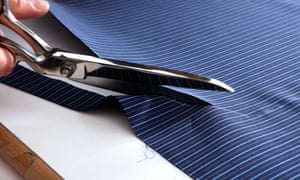
    Scissors cutting fabric

    “The artisanal tradition is a cultural legacy that takes decades to transmit from a seasoned master to a young talent and despite common thoughts, a large number of young people continue to express their desire and will to learn the secrets of those crafts,” added Fonticoli.

    Concerned about its ageing needle workers, Brioni opened the tailoring school in 1985 to ensure their skills were passed on. But it is not the only firm helping to revive the image of the traditional artisan, thus piquing the interest of young Italians.

    “Working with your hands is becoming interesting,” Stefano Micelli, a professor at Venice’s Ca’ Foscari university and author of the book Future Craftsman, said, pointing to the allure of the “Made in Italy” brand and advertising campaigns by the likes of the fashion house Pucci and Brunello Cucinelli, famous for its cashmere jumpers, promoting a fresh image of the artisan.

    “This [the advertising campaign] made a very important impact on a new generation who are thinking about craftsmanship in a different way.”

    The revival has also filtered down to small businesses, with Italians rediscovering their entrepreneurial spirit, whether it be in shoe-making, hairdressing, tailoring or making pasta.

    “This is a very Italian thing, we do have this long tradition in the small business area, it’s part of our culture,” added Micelli.

    New technology and a push by regional and local level governments to help facilitate the growth of startups, particularly in the business hub of Milan, are also playing their part.

    “The policies that are relevant to this new way of doing business don’t necessarily belong to the state government, but rather the local and regional municipalities,” said Micelli. “But I would stress that it’s not about being nostalgic and going back to the past, it’s about the future, technology, and being innovative.”

    Driven both by curiosity and the need to find a job in a country where youth unemployment has almost doubled to 37.9% within the last 10 years, Federico Badia is an example of someone who set out to learn the secrets of his craft – but without the help of an esteemed school.

    The 29-year-old shoemaker, who owns a shop in Orvieto, a hilltop town in Umbria, didn’t go to university and instead travelled across Italy in his early 20s looking for an apprenticeship.

    He developed a passion for the craft while working for a cobbler in his teens, after stumbling across a pair of shoes that a customer had left for repair 38 years before.

    The shop closed after the cobbler retired, and so he set out on a journey that took him to Turin, Florence and Milan in search of a master. Earning his keep by waiting on tables, he was rejected by all until he walked into a shoemaker’s shop in Rome and offered to work for free in exchange for being taught.

    “By the time I got to Rome, I realised that I didn’t need a job, I needed to learn,” he said. “I worked for free for almost two years. Spending money on going to a school or university is easy but if you’re really passionate, you will find a way.”

    Italy has one of the most sluggish economies in the European Union, with the overall unemployment rate standing at 11.7% in January, figures from Istat, the national statistics agency, showed.

    But there are some signs of recovery among small artisanal businesses, with hiring among them rising 2.3% in 2016, according to data from CNA, the national confederation of artisans and small businesses.

    Claudio Giovine, a chief economist at CNA, said this is partly due to the economy in general performing mildly better and firms having more flexibility with work contracts.

    There has been a trend among school leavers veering towards traditional trades, but also among graduates striking out alone, he added.

    “They are starting to rediscover the sartorial value in products, providing something custom-made, as well as the importance of Italy, which is at the forefront of things that are well made.”

    Badia, who now sells shoes from upwards of €1,000, learnt from his shoe master that the most important requirement of an artisan was to be humble, which is also part of the Brioni tailoring school philosophy.

    “Then, if you become a great artisan, it doesn’t matter where the shop is, if you’re humble and make a good product, the customers will come.”

    Source: How the return of traditional skills is boosting Italy’s economy | World news | The Guardian

  • François-Henri Pinault on a More Sustainable Fashion Industry – Bloomberg

    It’s a matter of being a part of the society where you want to do business, or not

    Source: François-Henri Pinault on a More Sustainable Fashion Industry – Bloomberg


    As you slip into heels or a tux to toast the New Year, you probably won’t be thinking about the fact that the leather in your shoes polluted drinking water in Indian villages, or that merino sheep were made miserable for your suit—and François-Henri Pinault doesn’t want you to have to. This year, the 54-year-old Frenchman is toasting the results in his 2016 sustainability report. The fashion industry pollutes heavily and relies on subsistence-wage earners and poorly treated animals. So the chief executive of Kering, which owns 16  brands, including Yves Saint Laurent, Gucci, Boucheron, and Puma, in 2012 set a series of goals to be met in four years that address every damaging aspect of the supply chain.

    Kering hasn’t hit them all—the word “challenges” appears 34 times in the report—but its companies are using more recycled paper in packaging, improving working conditions, and eliminating some toxic chemicals, among other accomplishments. The $13 billion giant may represent only a small slice of the multitrillion-dollar apparel and accessories industries. But think of it as proof of concept, says Pinault, whose company’s stock has doubled in the four years since he’s implemented his plan.

    Why did you set out to make Kering sustainable?
    The [2013] acquisition of Puma was a game-changer. At that time, Puma was run by Jochen Zeitz. Jochen is someone who was personally committed to the environment. He went very far with it through Puma. And he gave me this new approach of sustainability. If you do it right, you can create for yourself amazing opportunity creating good for the planet, for your employees, for your shareholders, for stakeholders. It’s a completely different vision.

    We spent three years putting in place this EP&L [environmental profit and loss, a model that factors in environmental costs] methodology that is very complex. We did that with international partners, NGOs, and we invested a lot of money in that. This is available for everyone on a completely free basis. [Kering also developed an app called MY EP&L that allows designers to calculate the impact of any product using a criteria of 5,000 factors.] You need to make sure that the company is organized to deal with that commitment. And one of the first moves we did, it was in 2008, if I remember well, I created a sustainability committee at the board level. We were the first listed company in France to do that. For all my CEOs, part of their yearly bonus is linked to sustainability achievements. Everyone has to have a full-time position in charge of sustainability.

    Is there a philosophical or spiritual component to your decision to run this kind of business?
    I succeeded my father. I always heard him telling me that whatever the size, a company needs to pursue a cause that is beyond the profit target you usually have. It’s a matter of being a part of the society where you want to do business, or not. I’m here for a certain number of years, and I hope I will transmit [Kering] to someone else, be it my son or anyone. The question is, What am I going to build in the meantime? My father built something extraordinary; I want to leave something that is. I strongly believe this will be, I hope, my legacy.

    You say sustainability is now part of luxury. Isn’t luxury about excess?
    Desires are short-term; we’re all about dreams. Fast fashion is about desire. Luxury is about dreams, so it’s all the time. You cannot make people dream if you’re cheating by offering a product that is a nightmare behind the scenes.

    Do you ever go personally to look at these efforts, such as the python skins used at Gucci?
    Gucci is one of the biggest brands using python skins. It’s not an endangered species, but if we don’t change anything, this will become an endangered species, because there is no transparency in that trade. You cannot just say, “Well, I’m compliant with the certificate that you need,” because we all know that most of the certificates are not really … . We decided with Gucci to go much beyond that. And the only solution in that case is to integrate ourselves into the farming of python. So we are now investing in Thailand and in China in python farms.

    What’s it like?
    Special. The python is an animal that needs to eat living animals. So you have to raise rats on the side. It’s also about making sure [we’re] respectful of the communities around the farm—we buy pythons from them. We use the [flesh] of the pythons, it’s used in those areas.

    We did that in crocodile farms also. It’s about the only way to really completely control the supply chain.

    Was it hard to get your individual brands on board with the mission?
    Not that difficult. But you have to understand that in a luxury brand, you have the creative people and the rest of the company. There’s always this thinking of, We have to let them do whatever they want. They cannot have rules or constraints around them, so don’t bother them with sustainability things, it will be a disaster.

    The first thing I did in 2008 was to see all the designers on a one-to-one basis. I said, “This is the commitment I’m thinking about. Where are you on that?” And it was amazing to see that they were even beyond me. I remember [Bottega Veneta Creative Director] Tomas Maier, for instance. No one would have thought it in the company, but Tomas was so involved. It was the first brand that reached 99 percent PVC-free. In less than two years. You should have seen Tomas pushing everyone, redesigning part of the collection.

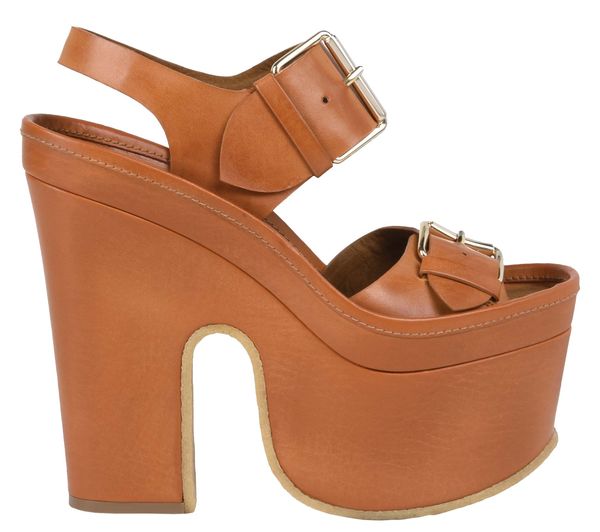
    Stella McCartney’s Resort 2017 platform is made with a leather substitute using renewable vegetable oil and recycled polyester.
    Courtesy: Kering

    What are your conversations like with Stella McCartney, known for not using leather?
    Stella is always one step further than anyone. I follow her! We have internally what we call the “new business model.” Stella is very much involved in the thinking of what that should be. For instance, [to reduce landfill waste,] we did a partnership with H&M and this company called Worn Again. [They’ve developed a recycling technique that separates blends back into original fibers and removes chemicals so the fiber can be rewoven.] This was brought by Stella.

    We also are working very significantly on new technology coming from biotech—trying to create leather from living animal cells. They get the animal cells from the skin of a living animal, and then they grow them. They’re going to do transparent leather. Not before 10 or 15 years. One of the students that won the award from Kering [at the London College of Fashion] was based on mushroom leather. Those big mushrooms that grow around trees, beautiful things—it’s a parasite, by the way.

    Are you finding that the rest of the fashion industry is paying attention to this now?
    I do consider that the luxury segment of that industry is leading the race in sustainability, because we have the resources.

    But again, what is very complicated in the fashion industry as a whole is that it’s not integrated. It’s a value chain with many, many players. And what is striking, and this is the first learning from our EP&L when we released it for the first time, 93 percent of our footprint is outside our legal boundaries.

    Presumably, if more people use your methods, it’ll make it more cost-effective, right?
    As usual, you find things and people come to you and say, “Well, we know how to do that in a more sustainable way, but it costs more.” What do we do? Of course it’s more, because it’s not the way we were doing things before. But there’s no reason why it has to be. So, the example of metal-free tanning process, it’s 20 to 25 percent more expensive because we have to salt the skins at the beginning of the process, and only a certain number can go through that. Those that can’t are considered waste.

    And this is where I told the team we are not an NGO specializing in sustainability. We are a corporation, and through our creativity we have to find economically viable solutions. So we are trying to find ways of reselling those skins to other industries that could use that quality. We’re down to 10 to 12 percent more expensive now. We also need to scale to lower the cost. But we will reach that point.

    What do you think about U.S. President-elect Donald Trump’s possible opposition to the Paris climate pact?
    Sustainability for me has nothing to do with politics. Politics can help, but it’s much above any political issue. If it’s part of the political debate, there’s something completely wrong. So I couldn’t imagine that America wouldn’t be part of the Paris agreement.

    It’s above the four years of any president in the world. A country like China is moving so fast. Could you imagine that America could be the slowest? America should lead the race in that, of course. It’s the new moon. In the ’60s, America was walking on the moon. It was the big thing. The new frontier is the sustainability frontier.

  • Australian ‘breakthrough’ in recycling textile and other waste 

    Researchers at Deakin University in the Australian state of Victoria have found a way to separate blends of cotton-polyester material, hailing this as ‘a major breakthrough’ for recycling textile and other waste.

    Source: Australian ‘breakthrough’ in recycling textile and other waste | Textiles – Australia – Recycling News | Recycling International – recycling magazine for professionals by professionals |